


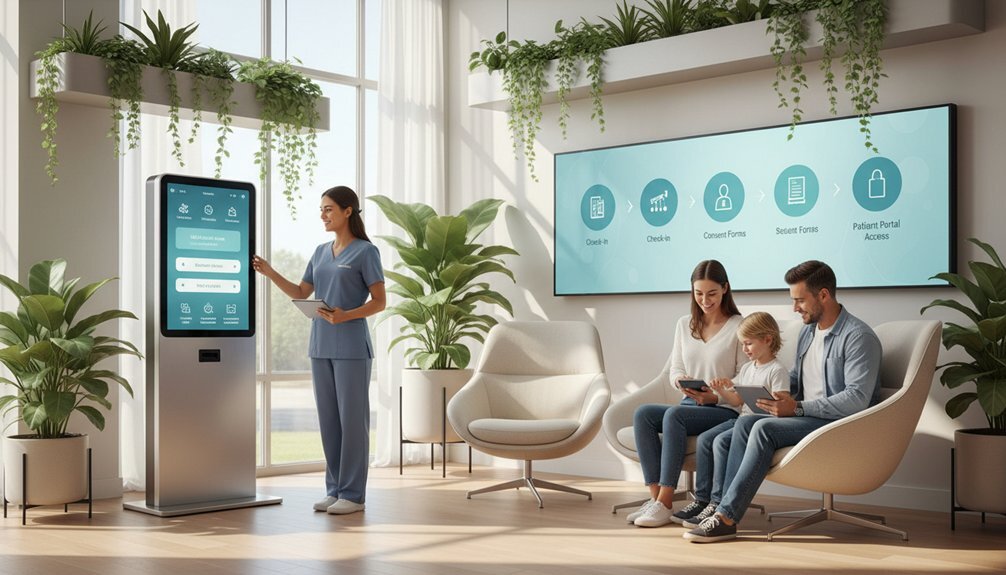
Improving your patient onboarding experience through smart digital workflows is essential for building trust and enhancing engagement. Start by utilizing user-friendly electronic forms and online scheduling, which cut down on paperwork and waiting times. Integrate personalized communication and automated reminders to keep patients informed and connected. These tech solutions lead to fewer errors and a smoother process, ultimately fostering stronger relationships with your patients. Stick around, and you'll discover even more ways to elevate this important journey.
The Importance of a Smooth Onboarding Process
 .
.
When you step into a healthcare setting, the onboarding process can feel like the first chapter of a book—setting the tone for everything that follows. A smooth onboarding experience isn’t just a formality; it’s your opportunity to establish trust and rapport with patients right from the start. When patients feel welcomed and understood, they’re more likely to engage actively in their care. You’ll find that clear communication, empathetic interactions, and organized processes can greatly enhance their comfort levels. Additionally, positive perceptions of the healthcare provider can lead to better patient engagement and adherence to care recommendations.
Key Components of Smart Digital Workflows
In today’s digital age, effective workflows can make or break the patient onboarding experience. To craft a smart digital workflow, you need to focus on several key components.
First, guarantee user-friendly interfaces that guide patients smoothly through forms and processes. Incorporate automated reminders to keep patients informed about appointments and necessary documents.
Data integration is vital; connecting systems allows for seamless information transfer, reducing errors and duplication. Consider personalized communication, tailoring messages to individual needs, which can foster trust. Additionally, understanding patient demographics is crucial for addressing unique challenges and improving overall engagement.
Finally, implement robust analytics to track engagement and gather feedback, helping you refine the process continuously. By prioritizing these elements, you’ll create an onboarding experience that’s not only efficient but also welcoming for your patients.
Benefits of Streamlining Patient Onboarding
 .
.
Streamlining patient onboarding offers a wealth of benefits that can greatly enhance both patient satisfaction and operational efficiency.
When you simplify the onboarding process, patients feel welcomed and valued, which boosts their overall experience. You’ll notice reduced wait times, allowing your staff to focus on care rather than paperwork.
Efficient workflows also minimize errors, ensuring that essential information is accurately captured from the start. This not only builds trust but also promotes compliance, as patients are more likely to follow through when they feel engaged.
Additionally, you can expect improved resource allocation, freeing up time for staff to address other important tasks.
Fundamentally, a smooth onboarding process sets the stage for better health outcomes and stronger patient relationships, aligning with the goal of creating a best-in-class patient experience.
Implementing Technology Solutions for Onboarding
As you look to improve your patient onboarding process, embracing technology can be a game-changer. By implementing digital solutions, you streamline administrative tasks, reduce paperwork, and enhance the overall experience for both patients and staff.
Consider using electronic forms that patients can fill out before their appointment; this not only saves time but also minimizes errors. Incorporating online scheduling systems allows patients to choose appointment times that work for them, increasing satisfaction.
Additionally, leveraging patient management software helps you track progress and monitor key metrics, ensuring a smoother onboarding journey. Ultimately, these technology solutions create a more efficient workflow, freeing up valuable time for your staff to focus on what matters most—providing quality care to your patients. Moreover, improving user experience through data-driven personalization can further enhance patient engagement during the onboarding process.
Enhancing Communication Through Digital Tools
 .
.
While many healthcare providers excel in delivering quality care, the onboarding process can often feel impersonal and fragmented. To bridge this gap, digital tools can enhance communication greatly.
Imagine receiving a welcome email with personalized video messages from your healthcare team, making you feel valued right from the start. Secure messaging apps allow you to ask questions and share concerns without feeling rushed, creating a more open dialogue.
Additionally, integrating chatbots can offer instant responses to common inquiries, ensuring you’re never left in the dark. By utilizing these digital platforms, you’ll not only feel more connected but also empowered in your healthcare journey. Effective communication strategies can further enhance the onboarding experience by fostering a supportive environment.
Embracing technology can transform your onboarding experience into one that's engaging and supportive.
Measuring Success: Patient Feedback and Outcomes
How do you really know if your onboarding experience is hitting the mark? The best way is to gather patient feedback and monitor outcomes.
Start by asking patients for their thoughts right after their onboarding process. Use surveys or quick follow-up calls to capture their feelings and suggestions. Analyze this feedback to identify trends and areas for improvement.
You should also monitor key metrics like appointment adherence and satisfaction scores over time. If patients are engaging with your services and reporting positive experiences, you’re likely on the right track. Additionally, ensuring regular follow-ups and updates can reinforce strong patient-provider relationships and further improve the onboarding process.
Frequently Asked Questions
What Specific Technologies Are Best for Patient Onboarding Workflows?
You’ll find that electronic health records, patient portals, and automated communication tools are best for streamlining patient onboarding workflows. These technologies enhance data accuracy, improve engagement, and guarantee a smoother experience for both patients and providers.
How Can Organizations Ensure Data Security During Onboarding?
To guarantee data security during onboarding, you should implement encryption, access controls, and regular audits. Training staff on security best practices and using secure platforms also helps protect sensitive patient information from breaches and unauthorized access.
What Are Common Pitfalls to Avoid in Onboarding Processes?
You should avoid common pitfalls like poor communication, inadequate training, neglecting user feedback, and overcomplicating processes. Simplifying steps and ensuring clarity will enhance the onboarding experience, making it smoother for everyone involved.
How Can We Customize Onboarding for Different Patient Demographics?
You can customize onboarding by tailoring communication styles, addressing specific health concerns, and using preferred languages. Incorporate feedback from diverse patient demographics to guarantee the process resonates and meets their unique needs effectively.
What Is the Typical Timeline for Implementing New Onboarding Workflows?
Implementing new onboarding workflows typically takes four to six weeks. You'll need to assess current processes, gather feedback, and test the new system. Regular check-ins will guarantee everything runs smoothly once it's live.