


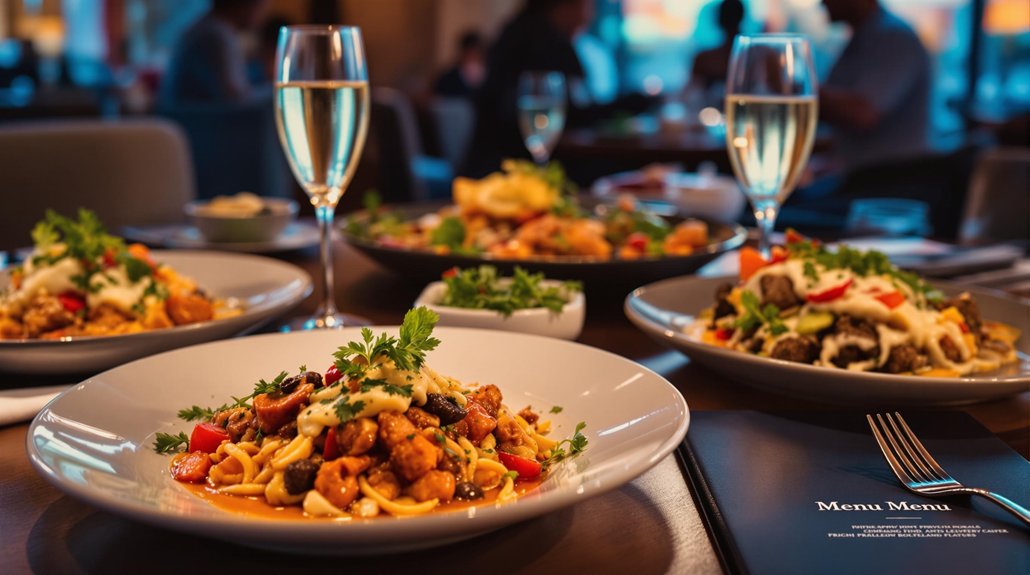
To boost your restaurant sales, smart menu strategies are essential. Start by placing high-margin items in prime spots and using tantalizing, descriptive language that engages your customers' senses. Implement strategic pricing techniques to enhance perceived value and encourage upselling. Use appealing visuals to showcase dishes, making them irresistible. Don’t forget, regularly updating your menu keeps customers intrigued. Mastering these techniques can transform your offerings and drive sales—stick around to uncover more insights that can help elevate your business.
Key Takeaways
- Place high-margin items in the top right corner of the menu to increase visibility and sales.
- Use descriptive language to create enticing dish descriptions that evoke cravings and emotional connections.
- Implement psychological pricing strategies, such as ending prices in .99 or .95, to enhance perceived value.
- Highlight high-margin items and pair them with complementary dishes to encourage additional orders from customers.
- Incorporate high-quality images and an appealing layout to visually engage diners and guide their purchasing decisions.
Understanding the Psychology of Menu Design
 .
.
When you step into the world of menu design, you're not just crafting a list of dishes; you're creating an experience that can profoundly influence your customers' choices. Understanding the psychology behind menu design is essential for maximizing your restaurant’s appeal. Think about how you can guide your customers’ eyes with strategic layout and positioning. For example, place high-margin items at the top right corner, where they naturally look first. Use enticing headings to create a sense of adventure, making each section feel special. Remember, colors and fonts can evoke emotions, setting the mood even before food arrives. By recognizing these psychological triggers, you can transform your menu into a tool that not only showcases your culinary offerings but also drives sales effectively. Additionally, incorporating local SEO strategies can further enhance your visibility and attract more customers to your restaurant.
Utilizing Descriptive Language to Enhance Appeal
Descriptive language acts as a powerful tool in menu design, turning simple dish names into tantalizing experiences. When you describe your dishes with vivid imagery, you engage diners’ senses, making them crave what’s on the plate. Instead of just “grilled chicken,” try “succulent grilled chicken marinated in zesty citrus herbs.” This not only paints a picture but also evokes flavors that make the dish irresistible. Highlight textures, aromas, and freshness to elevate each item, creating an emotional connection. Your goal is to transport guests from the moment they read the menu, enticing them to indulge. Remember, the right words can ignite curiosity, drive decisions, and ultimately boost your restaurant's sales, turning first-time visitors into loyal patrons. Implementing effective loyalty incentives can further enhance this experience by encouraging repeat visits and building lasting relationships.
Strategic Pricing Techniques to Maximize Profit
 .
.
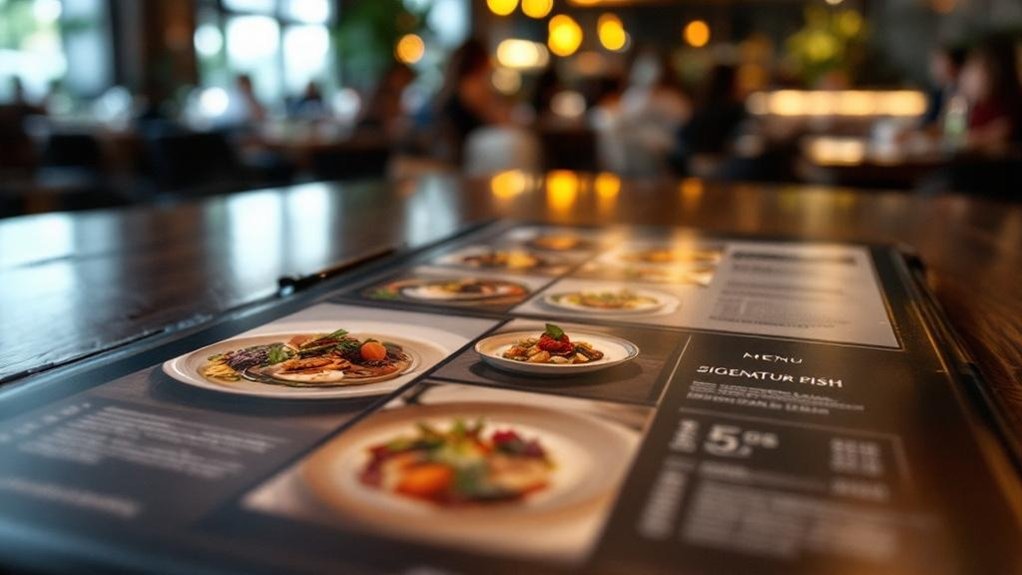
While you might think that menu design revolves solely around enticing descriptions, strategic pricing techniques can greatly influence your restaurant's bottom line. Start by analyzing your food costs; knowing what you spend helps you set prices that guarantee profitability. Consider using psychological pricing—ending prices in .99 or .95 can make dishes feel more appealing. Additionally, implement price anchoring; placing higher-priced items next to your signature dishes makes them seem more affordable. Don’t forget about offering bundles or meal deals; these can increase perceived value and encourage upselling. Finally, be flexible; regularly review and adjust your prices based on seasonality, competition, and customer feedback. By applying these strategies, you’ll maximize profit while keeping your customers satisfied. Implementing a loyalty rewards program can also encourage repeat visits and boost overall sales.
Highlighting High-Margin Items for Increased Sales
Highlighting high-margin items on your menu can greatly boost your restaurant's sales, especially when you consider the strategies you've already put in place. Start by identifying those dishes that not only deliver higher profit margins but also resonate with your customers' tastes. Showcase these items prominently, perhaps by placing them at the top of your menu or using enticing descriptions that spark interest. You might also consider pairing them with complementary items, encouraging diners to order more. Additionally, training your staff to recommend these high-margin dishes can create a more personalized experience, ultimately leading to increased sales. Remember, the right spotlight on these items can make a significant difference in your bottom line, so take advantage of this opportunity! Furthermore, consider implementing family-focused promotions that can increase overall sales and engagement.
The Role of Visual Elements in Menu Presentation
 .
.
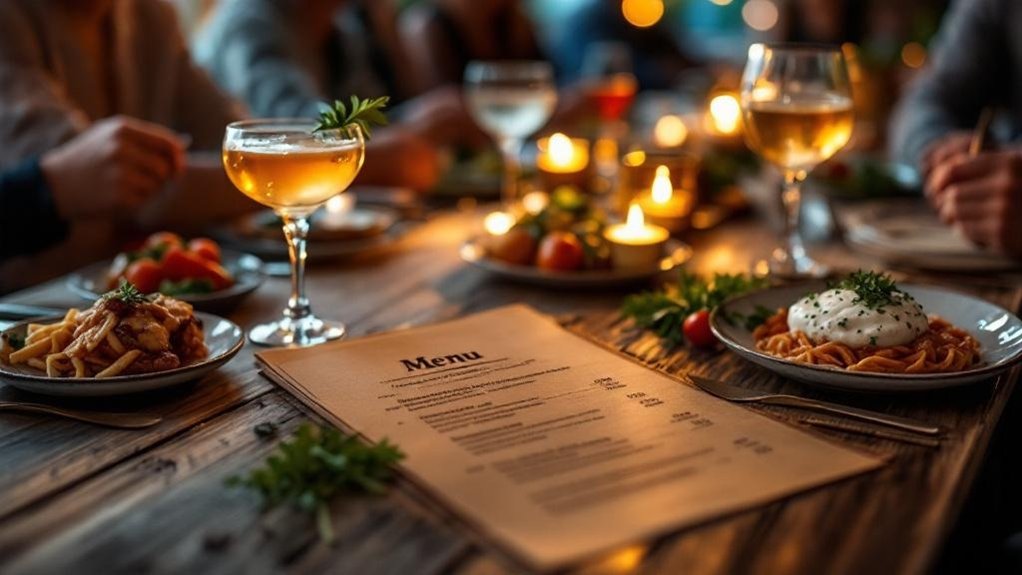
When it comes to menu presentation, visual elements play a crucial role in the dining experience. You want your menu to be more than just a list of dishes; it should entice and excite. High-quality images can evoke cravings and help customers visualize their meal, making them more likely to order. Consider the layout, too. Grouping similar items together or using boxes can guide the eye and highlight specials. Fonts should be easy to read, while colors can evoke certain moods—warm tones might create a cozy feel, while cool tones can suggest freshness. Ultimately, effective visual elements not only enhance the aesthetic appeal of your menu but also influence purchasing decisions, driving up sales and ensuring your restaurant stands out. Additionally, incorporating high-quality visuals can create emotional connections that compel potential customers to visit.
Regularly Updating the Menu to Maintain Customer Interest
To keep your restaurant buzzing with excitement, regularly updating your menu is essential. Diners love discovering new flavors and seasonal specials, so don’t underestimate the power of fresh options. Consider rotating your menu items every few months, or even monthly, to keep things intriguing. This not only piques customer interest but also encourages repeat visits. You can introduce limited-time dishes that highlight local ingredients or seasonal produce, creating a sense of urgency and exclusivity. Additionally, listen to your patrons' feedback; they often provide valuable insights on what works and what doesn’t. By revitalizing your menu consistently, you create an engaging dining experience that keeps guests coming back, enthusiastic to see what delicious surprises await them on their next visit. Building local partnerships can also enhance your menu offerings and attract a broader audience by tapping into a shared customer base.
Frequently Asked Questions
How Can I Train Staff to Upsell Menu Items Effectively?
To train your staff to upsell menu items effectively, start by role-playing different scenarios. Give them specific phrases to use, like suggesting a pairing or highlighting specials. Encourage them to share personal favorites, creating a genuine connection. Regular feedback is vital; discuss what works and what doesn’t during team meetings. Finally, incentivize successful upselling to motivate your team. When they feel confident, they’ll naturally enhance the dining experience for your customers.
What Are the Best Ways to Gather Customer Feedback on Menu Items?
To gather customer feedback on your menu items, consider using short surveys on receipts or digital platforms. Encourage honest opinions by offering a small incentive, like a discount on their next visit. You can also engage with customers directly, asking them about their favorites or any suggestions they have. Social media is another powerful tool; create polls or encourage reviews, ensuring you’re always listening to their feedback for continuous improvement.
Should I Consider Seasonal Menus for Better Sales?
Absolutely, you should consider seasonal menus! They not only highlight fresh, local ingredients, but also create excitement for your customers. Changing your menu with the seasons keeps things interesting and can draw in repeat customers enthusiastic to try new dishes. It allows you to showcase your creativity while aligning with seasonal flavors. Plus, there's a certain charm to seasonal offerings that can enhance your restaurant's reputation as a go-to dining destination.
How Often Should I Conduct Menu Analysis for Improvement?
You should conduct menu analysis at least twice a year, but quarterly is even better. This allows you to track trends, customer preferences, and seasonal ingredients. By regularly reviewing your menu, you can identify what dishes are flying off the shelves and which ones are gathering dust. Don’t forget to contemplate customer feedback, too. It’s all about staying relevant and ensuring your offerings resonate with your diners. Keeping things fresh keeps them coming back!
Can Online Menus Differ From In-Restaurant Menus for Better Engagement?
You can tailor your online menu to enhance engagement by including vivid descriptions, enticing photos, and even seasonal specials. While in-restaurant menus can focus on quick access, online menus allow for storytelling that captures your brand's essence. Consider integrating customer reviews or highlighting popular dishes to create a dynamic experience. This approach not only attracts attention but also encourages customers to explore more, leading to increased interest in your offerings.