


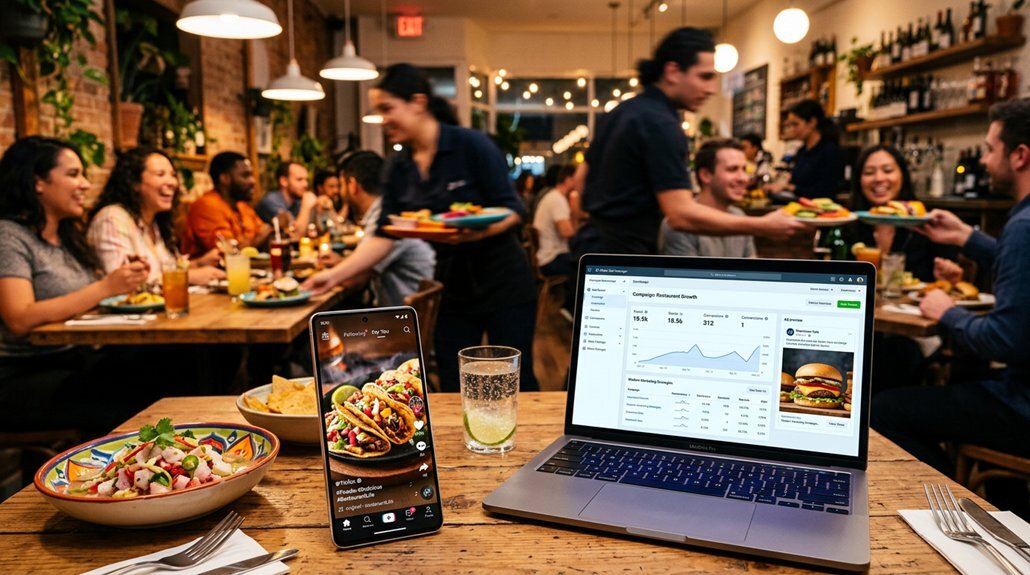
Paid social ads on Meta and TikTok give your restaurant a direct line to hungry diners who are actively deciding where to eat. Since 74% of people use social media to choose restaurants, showing up with compelling ads isn’t optional anymore—it’s essential. Start with a modest daily budget, target locals within a 10-mile radius, and let strong visuals do the heavy lifting. Keep exploring to reveal the full strategy.
Why Paid Social Ads Drive More Restaurant Diners
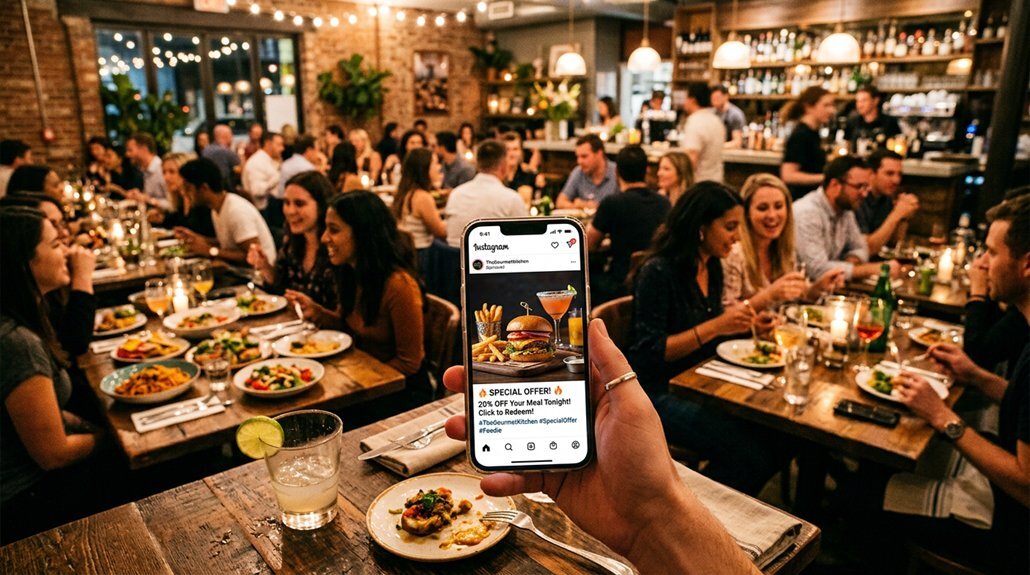
Consider this: 74% of people use social media to decide where to eat, and 90% check a restaurant’s social pages before ever walking through the door. That’s your audience, actively looking for reasons to choose you.
Paid social ads put your restaurant directly in front of those decision-makers at exactly the right moment. Unlike organic posts, paid campaigns convert 25% more effectively, turning browsers into paying customers. Incorporating community engagement into your marketing strategy can further enhance the effectiveness of these ads. Add personalized messaging tied to real-time factors like weather, meal times, or seasonal specials, and you’re not just running ads — you’re meeting diners where their appetite already is. Since 65% of restaurant revenue comes from repeat customers, pairing paid social with broader brand-building efforts helps turn first-time visitors into loyal regulars.
Meta vs. TikTok: Which Platform Should Your Restaurant Use?
Choosing between Meta and TikTok isn’t really a question of which platform is better — it’s a question of what your restaurant needs most right now.
If you’re trying to build awareness quickly on a limited budget, TikTok’s lower CPMs and explosive engagement rates make it hard to ignore.
But if you’re focused on converting past visitors into loyal regulars, Meta’s retargeting tools and CRM integration give you a meaningful edge.
Your target audience matters too — TikTok skews younger and impulse-driven, while Meta reaches broader demographics with stronger lifetime value potential.
TikTok attracts younger, impulse-driven diners. Meta captures broader audiences with stronger long-term loyalty potential.
Ideally, you’re not choosing one over the other. You’re using TikTok to spark discovery and Meta to close the loop, turning first-time curiosity into consistent, repeat visits. In fact, 49% of TikTok users make a purchase within 24 hours of discovering a product, making it a powerful first touchpoint for driving immediate foot traffic to your restaurant.Set Your Restaurant Paid Social Ad Budget
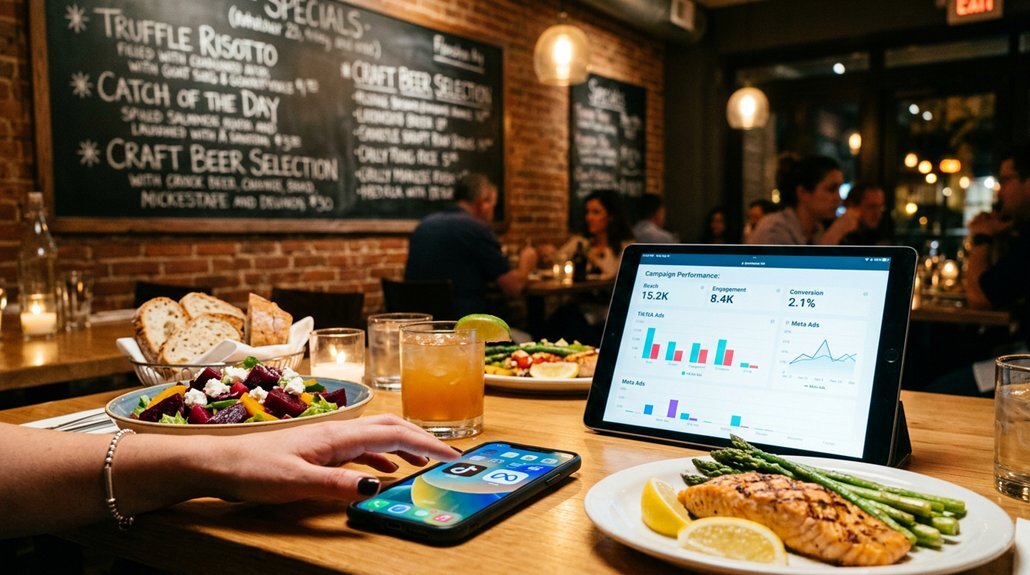
Setting a paid social budget for your restaurant doesn’t have to feel like guesswork. Start by allocating 2–5% of your annual revenue specifically to social media advertising. This approach aligns well with the need to foster loyalty by connecting with your target audience.
If your total marketing budget is already established, reserve 5–10% of it for paid social campaigns.
On a campaign level, begin with a daily budget of $20–$50 and keep your geographic targeting tight—think a 10-mile radius around your location rather than blanketing an entire city.
This precision reduces wasted spend and builds local momentum first. Also, set aside 5–10% of your marketing budget for testing new strategies and ad formats. Use carousel ads to showcase multiple dishes or promotions within a single carousel ad format, maximizing the value of your testing budget across different offerings.
Testing before scaling helps you identify what actually works, so you’re not pouring money into campaigns that haven’t proven themselves yet.
Create Restaurant Ad Visuals That Convert
Every visual your restaurant puts in front of a potential customer is doing one of two things—pulling them in or losing them to the next scroll. In paid social, you don’t get a second chance, so quality matters enormously.
Invest in lighting and a decent camera, or hire a professional food photographer. Capture texture, steam, and vibrant color—these details trigger appetite and purchase intent. Short video clips of sizzling pans, cocktails being poured, or pizza sliding into an oven stop scrolling cold and build anticipation.
Authentic behind-the-scenes moments often outperform polished production. Candid kitchen clips and staff appearances build trust in ways commercials simply can’t.
Whatever you create, keep it visually consistent—same color palette, same tone—so your brand becomes instantly recognizable across every platform where your ads run. Research shows that 74% of diners check social media before deciding where to eat, making every ad visual a direct influence on that decision.
Launch Your Restaurant Paid Social Campaign
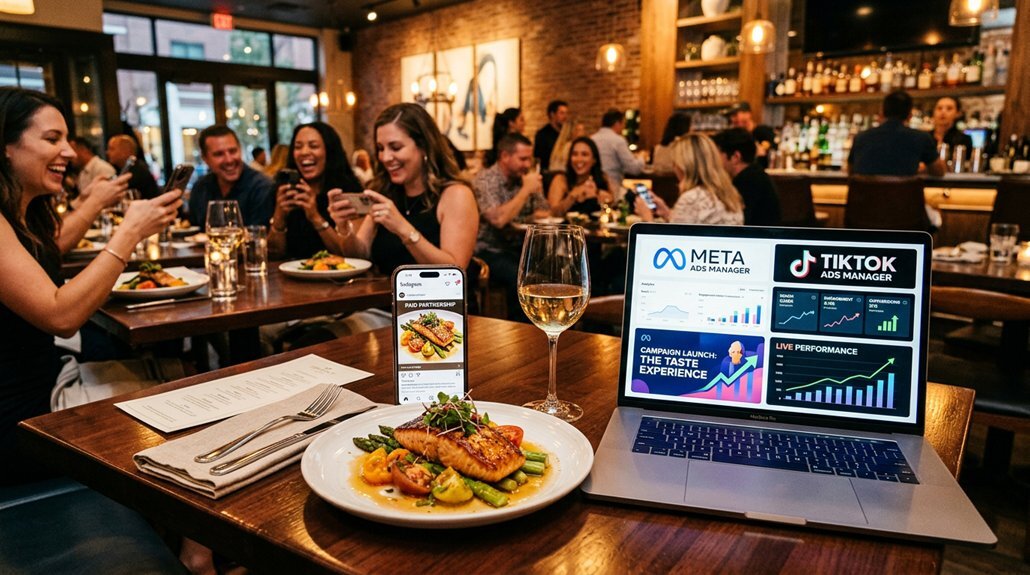
Once you’ve got compelling visuals ready to go, the next step is building a campaign structure that actually puts them in front of the right people.
Start by setting a realistic budget—£500 to £1,000 monthly gives you enough room to test formats and refine targeting without wasting spend.
Use location-based targeting to reach diners within a 10-mile radius, and pair that with carousel ads to showcase multiple dishes or offers in a single placement.
Post three to five times weekly on Instagram and Facebook, and daily on TikTok to stay algorithm-relevant.
Add reservation buttons, ordering links, or catering forms directly to each post so every ad has a clear next step that moves people from scrolling to booking. Regularly reviewing your performance data ensures your ad spend is being directed toward the strategies that are actually delivering results.
Track the Metrics That Measure Ad ROI
Running paid social ads without tracking their performance is like cooking a new dish without tasting it—you won’t know what’s working until it’s too late to adjust.
Start by calculating your ROI using this formula: (Net Profit ÷ Total Marketing Investment) × 100. A 300% ROI means you’re earning $3.00 for every $1.00 spent. Additionally, collaborating with influencers can amplify your reach and enhance the overall effectiveness of your campaigns through engaging narratives.
Beyond ROI, track ROAS to see which promotions drive the most revenue, and use UTM parameters to trace exactly where your traffic originates.
Calculate your cost per lead by dividing total spend by new leads generated.
Don’t overlook engagement metrics like reach, shares, and saves—they reveal indirect value through brand awareness and customer loyalty that quietly compound over time into measurable long-term growth. Understanding your guest lifetime value, calculated by multiplying gross annual sales per guest by the number of years a guest dines, gives you a concrete benchmark for evaluating whether your ad spend is truly paying off.
Frequently Asked Questions
How Do I Handle Negative Comments on My Restaurant’s Paid Social Ads?
Respond to negative comments quickly and professionally. Acknowledge the issue, apologize sincerely, and explain how you’ll fix it. You’ll show potential customers you’re committed to satisfaction, often turning critics into loyal supporters.
Should My Restaurant Hire an Influencer Instead of Running Paid Ads?
Both options can work for your restaurant, but they’re not mutually exclusive. Influencers build trust and credibility, while paid ads offer precise targeting. Consider combining both strategies to maximize your reach and revenue effectively.
Can Small Restaurants Compete Against Large Chains Using Paid Social Ads?
Yes, you can absolutely compete. TikTok’s algorithm gives you organic reach regardless of budget, and your authentic behind-the-scenes content beats a chain’s polished ads every time with younger diners.
How Often Should My Restaurant Refresh Its Paid Social Ad Creative?
Refresh your Meta ads every 2–4 weeks and your TikTok creatives even faster—sometimes within days. Watch your engagement and CTR closely; when performance drops, it’s time for new creative.
What Legal Requirements Apply to Restaurant Paid Social Media Advertising?
You must guarantee all claims are substantiated, disclosures are clear and conspicuous, sponsored content’s properly labeled, influencer relationships are disclosed, and you’ve obtained permission for any user-generated content you’re using in your ads.