


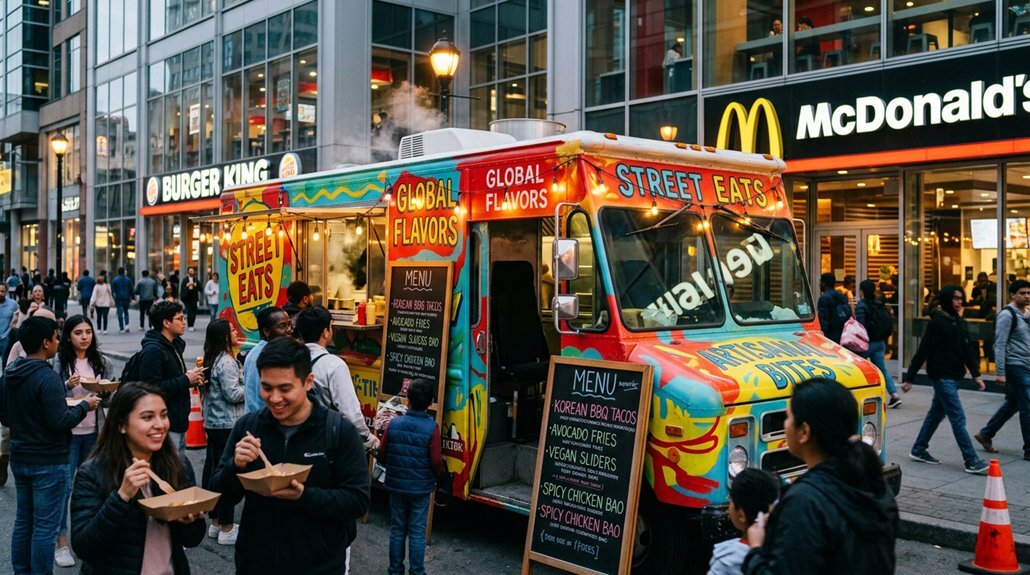
Challenger brand thinking lets you compete against fast food giants by focusing on mindset, not size. You identify where market leaders have grown complacent, then build your identity around fixing those gaps. Brands like KFC leaned into nostalgia and community engagement instead of chasing scale, proving authenticity outperforms budget every time. Combine smart menu innovation, loyalty strategies, and local connections, and you've got a real competitive edge—and there's a proven playbook showing exactly how it's done.
What Is Challenger Brand Thinking in Fast Food?
 .
.
Ambition, not size, defines what separates a challenger brand from everyone else in fast food. You don't need the largest marketing budget or the most locations to compete — you need a sharper point of view.
Challenger brands reject the idea that the market leader sets the only rules worth following. Instead, they identify what the giant gets wrong, then build their entire identity around fixing it. In this pursuit, they can leverage local influencers to authentically connect with their communities and showcase their unique offerings.
Think fresher ingredients, bolder values, or a dining experience that actually respects your time and intelligence. This mindset pushes emerging restaurant brands to move faster, speak more honestly, and connect more deeply with customers who feel underserved.
It's not about being the loudest voice — it's about being the most relevant one. Challenger brands are ultimately defined by mindset, not market position, meaning any restaurant brand willing to question category conventions can compete on its own terms.
How KFC Turned Underdog Status Into a Competitive Weapon
When you're not the biggest player in the room, you've got two choices: shrink into irrelevance or sharpen what makes you different. KFC chose the latter. Rather than chasing McDonald's scale, KFC leaned into its distinct identity, using Colonel Sanders nostalgia and classic recipe storytelling to anchor its 2025 "Comeback Plan." Additionally, KFC's active participation in community engagement helps foster a loyal customer base that values their unique offerings.
The "Obsession" campaign earned a 4.7/5 effectiveness rating, outperforming QSR industry averages and generating entirely earned media coverage that sustained national and international attention for a full month.
Meanwhile, KFC invested $500 million in employee training, recognizing that operational excellence quietly reinforces brand credibility.
Underdog positioning isn't weakness; it's leverage. When you commit to what genuinely separates you from competitors, you stop competing on their terms and start winning on your own. To extend that edge into new territories, KFC opened 700 new units in emerging markets like India and Africa in 2023, targeting untapped demand rather than fighting for saturated ground.
How Challenger Brands Use Menu Innovation to Outmaneuver Larger Rivals
 .
.
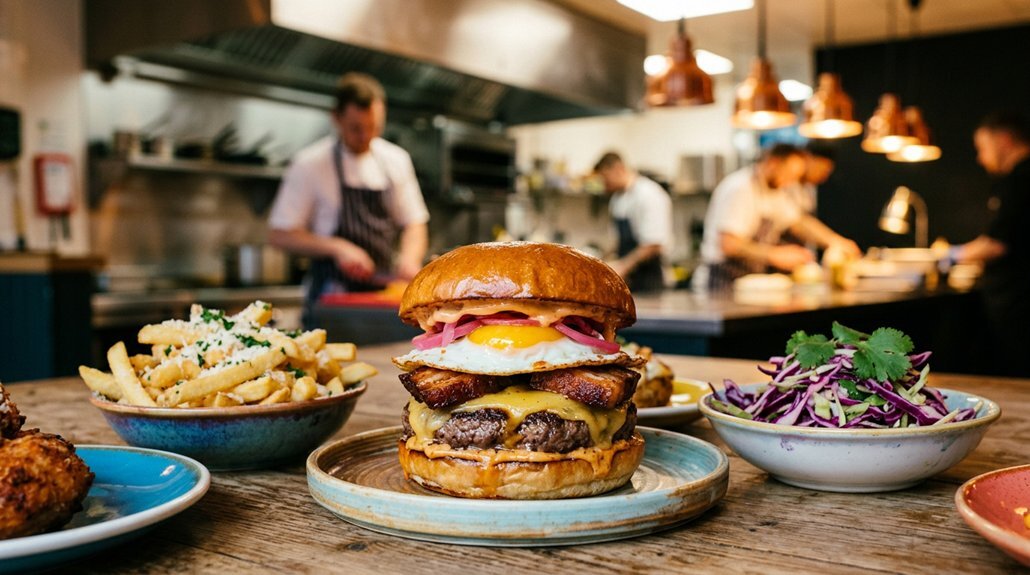
Menu innovation is where challenger brands quietly close the gap on giants who've grown too comfortable with their own legacy menus. You don't need a massive marketing budget when your menu itself becomes the conversation.
Limited-time global flavors—birria tacos, Korean fried chicken, bao buns—create urgency while signaling sophistication at accessible price points. TikTok-driven menu cycles let you test, validate, and retire items before trend fatigue sets in. Creative content investment enhances your visibility and lays the groundwork for a loyal customer base.
Global flavors create urgency. TikTok validates the cycle. Retire trends before they retire you.
High-protein segments attract fitness-conscious regulars who justify premium pricing through habit. Meanwhile, macro nutrient displays and portion flexibility differentiate you from competitors still printing static menus.
Weekly POS reviews keep underperformers off your board fast. When your menu moves with culture instead of against it, you're not chasing the giants anymore—you're making them chase you. Rotating featured cuisines on a quarterly basis keeps menus feeling fresh while giving operations enough runway to standardize prep and maintain consistency.How Challenger Brands Build Fierce Loyalty Without Mass-Market Budgets
A menu that moves with culture gets people through the door—but it's loyalty that keeps them coming back. Building that loyalty without a nine-figure marketing budget is where challenger brands have quietly mastered something the giants still struggle to replicate.
You don't need mass-market spend when AI-powered personalization anticipates what your best customers want before they order. Custom loyalty programs built on predictive technology reward consistent engagement, extending customer lifetime value without expensive advertising cycles. A well-crafted loyalty rewards program not only incentivizes repeat visits but also fosters deeper connections with customers.
OLIPOP partnered with creators who genuinely aligned with their values, generating organic reach traditional budgets couldn't manufacture. Burger King's geofenced Whopper Detour delivered a 37:1 return on investment through precision targeting alone.
These aren't budget workarounds—they're strategic advantages that turn meaningful customer relationships into compounding growth machines your larger competitors can't easily replicate. Challengers who execute this well can target a 15-20% increase in customer lifetime value through loyalty-driven personalization strategies alone.How Challenger Brands Stay Scrappy as They Scale
.
Scaling without losing your soul is one of the hardest things a challenger brand will ever do. Growth tempts you to standardize everything, smooth out the edges, and chase efficiency over identity. But that's exactly where most brands stop being interesting.
The scrappiest restaurant brands stay dangerous by protecting what made them different in the first place. They keep decision-making close to the ground, empower local operators, and resist the urge to over-process their culture into a corporate manual. By embracing user-generated content, they not only enhance authenticity but also foster community engagement.
You don't have to stay small to stay sharp. You have to stay intentional.
Every new location, every new hire, every new menu item is a chance to either reinforce your challenger identity or quietly abandon it. The brands that win choose reinforcement, every single time. Shifting from intuition to data-backed strategies gives growing brands the clarity to scale without drifting from what made them worth following in the first place.
Frequently Asked Questions
What Legal Risks Arise When Challenger Brands Directly Name Competitors in Advertising?
When you directly name competitors, you're risking trademark infringement, false advertising claims, and consumer confusion. You must guarantee claims are truthful, non-misleading, and include clear disclaimers to avoid liability under Section 43(a).
How Do Franchise Owners Respond When Corporate Adopts a Challenger Brand Strategy?
When corporate adopts a challenger brand strategy, you'll find franchise owners react with mixed emotions—some embrace the bold shift, while others resist it, fearing operational disruptions, increased costs, and uncertainty about whether the new direction'll actually drive customer traffic.
Can Challenger Brand Positioning Survive a Public Relations Crisis or Product Recall?
Your challenger brand positioning can survive a PR crisis or product recall if you've built genuine community trust, act transparently, respond quickly, and consistently demonstrate the authentic values that originally differentiated you from larger competitors.
How Do Investors Evaluate Challenger Brand Strategies Compared to Traditional Growth Models?
You'll find investors weigh challenger brand strategies against digital adoption rates, emerging market penetration, and menu differentiation rather than relying solely on traditional store-count growth metrics and franchisee expansion velocity.
What Metrics Best Measure the Success of a Challenger Brand Campaign?
You'll want to track unaided awareness growth, brand consideration scores, market share gains, conversion rates, and customer lifetime value. These metrics directly connect your challenger campaign's creative disruption to measurable revenue impact and competitive positioning against established fast food giants.