


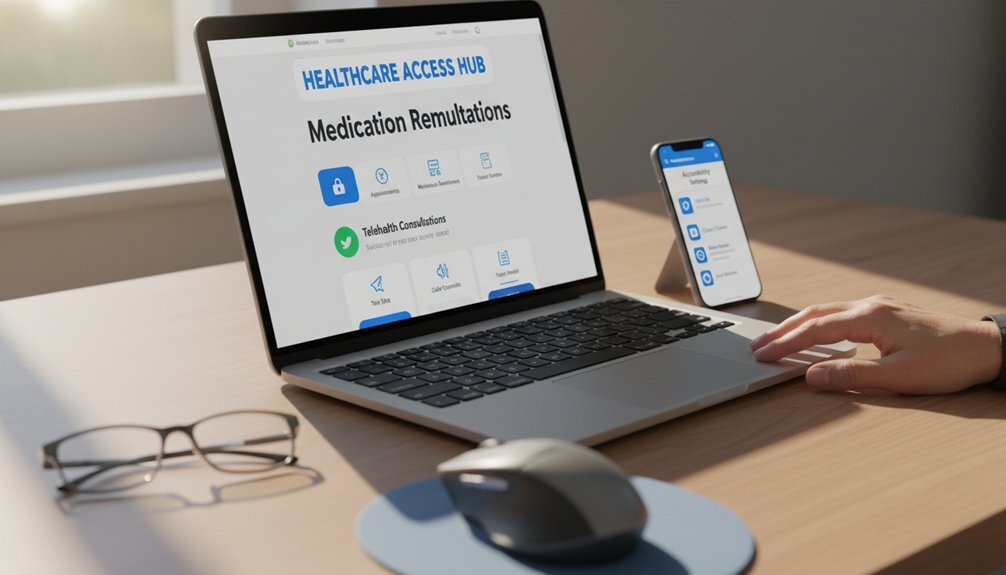
To improve accessibility on healthcare websites, start by ensuring clear navigation, using descriptive alt text for images, and maintaining high color contrast for readability. Responsive design is key for all devices. Remember, Google now cares about inclusivity because accessible sites enhance user experience, reduce bounce rates, and boost search rankings. By prioritizing these elements, you won't just attract more visitors but also provide essential information to everyone, fostering trust and loyalty. There's more you can explore beyond this.
Understanding Accessibility in Healthcare Websites
 .
.
When you think about healthcare websites, you mightn't immediately consider accessibility, but it’s an essential aspect that affects every user.
Accessibility in this situation means creating websites that everyone, regardless of ability, can navigate easily. Imagine a patient with visual impairments struggling to book an appointment because the site isn’t compatible with screen readers. You wouldn’t want that to be your loved one, right?
By utilizing clear navigation, appropriate color contrasts, and alt text for images, you can guarantee everyone has a positive experience. This isn’t just a nice-to-have; it’s a necessity. Additionally, improving user experience helps build patient trust and ensures that your website is welcoming to all users.
The Importance of Web Accessibility for Patients
While it mightn't seem obvious at first, web accessibility is essential for patients maneuvering healthcare websites. Imagine searching for medical information or scheduling an appointment, only to find the site’s layout confusing or difficult to navigate. This can be frustrating and even intimidating, especially for those with disabilities or limited tech skills.
When websites are accessible, patients can easily find the information they need, leading to better health outcomes and a more positive experience. Accessibility also fosters inclusivity, ensuring that everyone—regardless of ability—can engage with healthcare resources. Moreover, enhancing web accessibility can positively influence patient perception, ultimately leading to greater trust and loyalty in healthcare providers.
Ultimately, making your website accessible isn't just a technical requirement; it’s a commitment to patient care and empowerment, making sure that every individual feels valued and understood in their healthcare journey.
Key Accessibility Guidelines and Standards
 .
.
Understanding the key accessibility guidelines and standards is essential for creating a healthcare website that truly serves all patients. The Web Content Accessibility Guidelines (WCAG) are your best starting point. They offer a thorough framework focusing on principles like perceivability, operability, understandability, and robustness.
Aim for WCAG's Level AA compliance, which covers critical aspects like text alternatives for images and ensuring all functionality is keyboard-accessible. Additionally, consider the Americans with Disabilities Act (ADA) requirements, which emphasize equal access to information and services. Furthermore, a deep understanding of the healthcare industry can enhance the effectiveness of your website's accessibility strategies.
Practical Strategies to Enhance Website Accessibility
To truly enhance accessibility on your healthcare website, it's crucial to implement practical strategies that cater to diverse user needs.
Start by ensuring your site has clear navigation; users should find information effortlessly. Use descriptive alt text for images to help visually impaired visitors understand your content.
Clear navigation and descriptive alt text are essential for ensuring all users can easily access and understand your healthcare content.
Consider a responsive design that adapts to various devices, making it easier for everyone, including those with cognitive disabilities, to access your services.
Don't forget about color contrast; high contrast between text and background improves readability for users with vision issues.
Finally, test your website with real users, including those with disabilities, to gather valuable feedback. Additionally, monitor online reviews to understand how users perceive your website's accessibility and make necessary improvements.The Impact of Accessibility on Search Rankings
.
Accessibility isn't just about creating a website that everyone can use; it also plays an essential role in how well your site ranks in search engine results.
When you prioritize accessibility, you improve user experience, which can lead to longer site visits and lower bounce rates. Search engines like Google notice these metrics, boosting your rankings.
Furthermore, accessible websites often load faster, another key factor in search algorithms. By ensuring your content is easy to navigate, you cater to a broader audience, including those with disabilities.
This inclusivity not only enhances your reputation but also aligns with Google's commitment to accessibility. Additionally, improving accessibility can reinforce emotional connections vital for effective healthcare branding.
In today’s digital landscape, ignoring accessibility could mean losing valuable traffic and potential patients.
Measuring and Maintaining Accessibility Improvements
While it might seem straightforward to implement accessibility features on your healthcare website, measuring and maintaining those improvements is where the real challenge lies.
Start by using tools like Google Lighthouse or WAVE to evaluate your site's accessibility score. Regular audits help you identify issues and track progress over time.
Don’t forget to gather feedback from users, particularly those with disabilities, as they can provide insights that automated tools can’t catch. Make it a routine to review your website every few months, especially after updates or redesigns. Additionally, understanding patient engagement metrics can help ensure that your accessibility efforts resonate with all users and foster a more inclusive online experience.
Frequently Asked Questions
What Are Common Accessibility Tools for Testing Websites?
Common accessibility tools for testing websites include WAVE, Axe, and Lighthouse. You can use these tools to identify issues, enhance user experience, and guarantee compliance with accessibility standards, making your site more inclusive for everyone.
How Can I Train My Team on Web Accessibility?
To train your team on web accessibility, start with workshops and online courses. Organize hands-on sessions, encourage discussions, and share resources. Regularly review guidelines to keep everyone updated and engaged in best practices.
Are There Legal Requirements for Healthcare Website Accessibility?
Yes, there are legal requirements for healthcare website accessibility, including the Americans with Disabilities Act (ADA) and Section 508 of the Rehabilitation Act. You should guarantee compliance to avoid potential lawsuits and provide equitable access.
How Often Should We Update Our Accessibility Practices?
You should update your accessibility practices regularly, ideally every six months. This guarantees compliance with evolving standards and addresses user feedback. Staying proactive helps create an inclusive experience for all visitors to your website.
What Are the Costs Associated With Improving Website Accessibility?
Improving website accessibility can cost anywhere from a few thousand to tens of thousands of dollars, depending on your current site’s state, required changes, and whether you hire professionals or tackle updates in-house.